Latest Posts

Showing posts with label News. Show all posts


Words by: Paolo Vera, Year 13

SPOILER ALERT: If you aren’t caught up with the TV show, please don’t continue reading this post…

Okay, so the Philippines isn’t exactly Westeros. There aren’t any dragons flying over us – just delayed PAL flights – and winter is definitely not coming anytime soon (or ever). However, the politics in our country does resemble the feudal system present in the world of Game of Thrones. Like in Westeros, where Lords and Ladies are given dominion over certain areas of land, provinces in the Philippines tend to be dominated by a single family. You may have even heard the term ‘dynasty’ thrown around. This, however, is not the only parallel between the Philippines and Westeros. The current presidential race is starting to shape up strikingly similar to the events on the show:


Vice President Binay – Is he as rich as a Lannister?
Binay isn’t the most liked man on social media right now. Facing numerous graft charges and countless political scandals, the Binay family is in a bit of a mess. However, like the Lannisters, the Binays are currently in power and – if the allegations are true – have access to a ridiculous amount of money. Both the Binays and the Lannisters are also known for worming themselves out of difficult situations, so don’t count the VP out yet; after all, he is known for his cunning. Just like the Lannisters during the War of Five Kings, Binay pulled a surprise comeback in the 2010 Vice Presidential elections and beat out current Presidential opponent Mar Roxas for the VP slot.


Mar Roxas – Stag of the ruling Liberal Party
Okay, so even though he’s not the most popular character on the show – definitely not popular with his daughter Shireen – Stannis Baratheon is technically the rightful ruler of the Seven Kingdoms. As his older brother King Robert had no rightful heirs (his “kids” being born out of #twincest), Stannis is second in line to the throne, which is why the honorable Ned Stark endorsed Stannis’ claim. Like Stannis, Mar is also backed by a powerful endorsement, that of current President Noynoy. Mar also has some serious experience in his tenure as a public servant – serving as a Congressman, a Senator and in numerous cabinet positions across three presidencies. Indeed, it is Stannis’ military experience that compels Ned to support him, thus drawing another parallel between the two pragmatic men.


Grace Poe – Winning back the throne for her father  
It’s no secret that the 2004 Philippine Presidential elections were probably rigged. Ex-president Gloria Macapagal Arroyo isn’t known for her honest, trustworthy character, after all. It is hence widely believed that Grace’s father, “King of Philippine Movies” Fernando Poe Jr., should have won the metaphorical “Iron throne.” Although FPJ did sue GMA for electoral fraud, the Supreme Court – filled with Gloria’s cronies, go figure – ruled the case in favor of GMA. Tragically, FPJ died later that year. Fast-forward to today, and Grace Poe, FPJ’s adopted daughter, is taking the political scene by storm. Topping the 2013 senatorial elections, the neophyte senator has now thrown her hat into the ring for the 2016 elections. She is, after all, topping every single survey published. Grace has been frequently compared to another powerful, strong-willed female character looking to restore her family name…none other than the Mother of Dragons herself, Daenerys Targaryen. Both of the two feisty females have spent a long time away from home, with Grace working in the USA and Khaleesi busy liberating Slaver’s Bay in Essos. But make no mistake, these women mean business – even if both ladies lack in ruling experience.
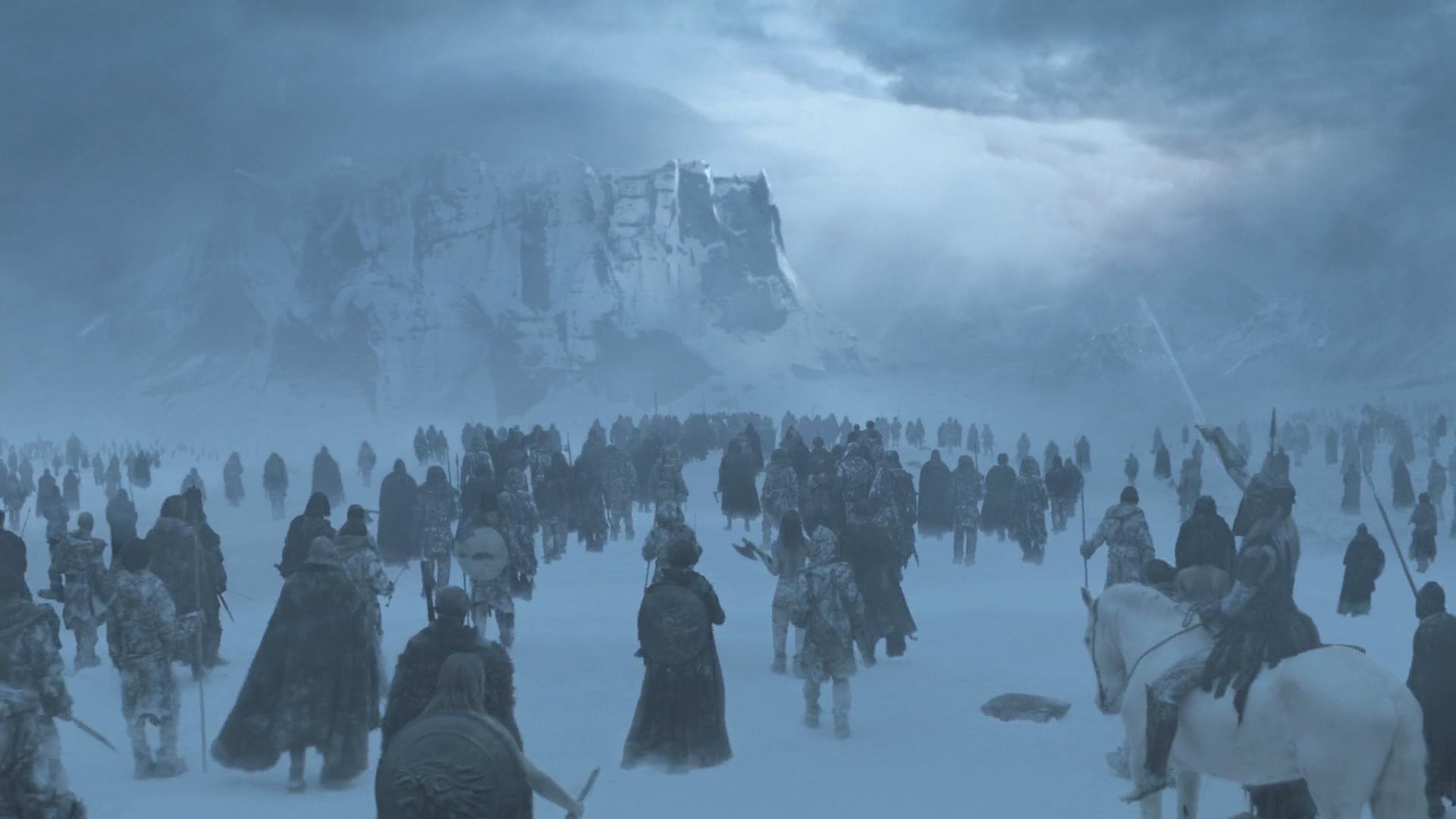

The threat beyond The Wall: China
Creeping in from the north and slowly encroaching our land, China are basically the White Walkers. And we should be very scared. There is no magical ice wall protecting us from this threat.

Ultimately though, whether Stark or Lannister, Poe or Binay, in both Westeros and the Philippines, your last name in politics matters.


Written by: Madeline Go, Year 12

Being new to BSM, I was pretty excited about my first International Evening.  Word had been circulating about it for weeks, and I was looking forward to all the costumes, performances and, of course, food. 

What I did not expect to experience, however, was being part of the opening parade. I dressed up as Lady Liberty (crown and all) when I went to school Thursday morning.  But nearer to 5pm, as I watched kids lining up behind their respective flags to enter Don Jones field, Beth asked if I would walk behind the flag of USA.  I wasn’t sure what was going on, but I went with it.  I was amazed by the costumes of the people around me; the details on them were absolutely stunning (I even saw three little Chinese lion dancers running about!), and all were worn with pride.  It was inspiring to see designs from all different cultures brought together through these excited, intermingling kids.  The little ones were also given helium balloons, some of which floated up to the covered court ceiling before the parade even began.  Briefly, I wondered how long it would take for the kids to lose all the balloons provided.


Then the parade began.  We marched around the field, waving our flags and smiling for the bystanders, until we all piled up onstage, a quasi-ordered jumble of colors and noise. The national anthems were sung, although I honestly couldn’t hear much of the words through the chatter onstage. 

There was a brief applause after the anthems.  Then a piano track started up, accompanied by a young, sweet voice; the cameras showed that it was from one of our very own parade marchers.  Suddenly, near the song’s climax, the kids onstage let out a collective cheer, and all at once dozens of red, white and yellow balloons flew up into the sky.  I had been expecting this moment, and thought I’d be petulantly sour at all those good balloons going to waste.  But instead, I had to admit that it was a beautiful sight.  Others must have agreed with me, as cellphones were whipped out of pockets to capture the whole thing.  In a strange way, I felt happy watching those colorful specks rise, over the city buildings, up into the blue sky, as one big mass.  It seemed the perfect way to start off a festival that celebrated the unity so strived for around the world.


The rest of the night was a blast. Of course, I happily sampled food from all around the world, from prize-winning Victoria sandwiches to spiced Indian samosas, from sweet Korean sikhye drinks to hot and steaming Irish stew.  Everything tasted delicious and was clearly made with effort and love.  But it wasn’t only the food that was the highlight of the night; the performances by students, parents, and staff were also amazing to watch.  To name just a few, there was a traditional Filipino Ati-Atihan dance, a tribute to the Swedish ABBA band, a multi-language rendition of Frozen’s “Let it Go”, and a wonderful father-daughters duet to a traditional Irish song—and all of these colorful and lively performances among others showcased the diversity present in our current world, or at least in our current school. But the best part for me was that everyone showed pride in their own nationality, yet at the same time respected others.  People appreciated and sometimes even partook in activities from cultures outside of their own, in the spirit of true internationality.

Unfortunately, I had to leave half an hour before the night drew to an official close.  I grabbed one last Australian lamington, gushingly hugged the TARDIS near the gates, and rode home.  Although the night was brief and still mostly about food, clothing and dance on the surface, and although I have been known to be a naĂŻve idealist, I still took some comfort in realizing that, at least for one evening, people were proud to showcase their own beliefs and traditions, and accept others’ as well.  In short, my first International Evening did not fail my expectations: in fact, it left me with the impression that humanity could still learn how to work together, not by eradicating their differences, but by acknowledging them and--like those red, white and yellow helium balloons--rising up to greater horizons as one.


Written by: Luis Recto, Year 12
Photographs by: Year 12 Biology and ESS Class

The Lago de Oro resort is located in Calatagan, Batangas - roughly a two hour car ride away from Metro Manila. When a large group of Year 12 students visited the resort earlier this year to study ecology and the mangrove swamps that surrounded the resort, many of the students were astounded by what they learned. 
Mangroves are vital to our country’s coastline, and play a crucial role in protecting the communities that are by the ocean. The 2004 tsunami that engulfed Northern Thailand launched a debate on how important mangrove swamps are in defending against natural disasters. Despite the fact that global awareness has lead to our realisation that maintaining mangrove swamps is vital, what we saw at Lago de Oro was worrying. There were mounds of trash and garbage, and in comparison to years in the past, the mangroves swamps were more damaged and were consequentially affected by the rubbish that floats ashore.
This trip opened my eyes to understand how pollution has a lasting effect on something that could potentially save hundreds of lives. The trip was not only an academic endeavour, it also helped us to realize an issue that needs to be understood and broadcasted to the rest of the country.  
Countless numbers of articles like this one have been written about mangroves - this is no different to the others. But with the right amount of awareness, the protection of these ecosystems can continue to keep places like Lago de Oro as beautiful as it is today.


Written by: Ashley Tan, Year 11

S-E-N-S-A-T-I-O-N-A-L!  It is quite remarkable that a group of such young actors, who hardly knew each other 2 months prior to the musical, were able to carry out a performance in such a professional manner. Nevertheless, the cast of BSM’s rendition of ‘The 25th Annual Putnam County Spelling Bee’, directed by none other than the great Paul Hannon, got an entire audience laughing their heads off.


Phenomenal performances from Stephanie Aquino, Andrew Holgate, Ella Brock, Nicola Thomson, Lance Sy Lato, Riana Lago, Miranda Doig-Henderson, Fred Mann, and Luc Edes enthralled the audience. But perhaps one of the most compelling and unique elements of the Spelling Bee was the participation of volunteer audience members. Even with some rough improvisation from the volunteers, the musical was highly entertaining and was executed smoothly, further displaying the cast members’ natural skill and talent.


On behalf of the BSM community, the members of Winston want to congratulate and give special mention to the entire cast, directors, band members, and production crew. We would also like to say a massive thank you to everyone else that sacrificed their time and effort to ensure that Spelling Bee turned out to be yet another successful school production. This musical comedy was nothing less than spectacular, and is definitely one for the books.


Written by: Paolo Vera
Photographs by: Molly Maynard

Clad in an electric blue romper, Ray-Ban clubmasters and a black bowler hat, Mrs. Jenna Storey looks like the quintessential, 20-something hipster you’d commonly find at a vinyl record store or corner cafĂ©. However, one tiny thing is different: the miniscule, month-old baby in her arms. “I never thought I’d be so lucky in my life,” says Mrs. Storey, “he’s literally perfection.”

Towering above the mother and son duo is Mr. Ian Storey, who looks down on the pair with such powerful affection that it almost makes you forget he’s a 6-foot-something water polo player.


“[Logan]’s got my mouth and he's got [Mr Storey]'s eyes.” Mrs. Storey admits, “But I don't know about his nose. And he's definitely got his dad's length.”  “Long arms,” agrees Mr. Storey, as he intermittently kisses his son’s feet – a curious, yet endearing habit he continues throughout the entire interview.

Together, the three make an interesting tableau: a picture-perfect family only found in diaper commercials or insurance ads. From one brief glance, it is evident that this young couple is grounded with their immense love for their firstborn; little Logan Storey is clearly the center of Mr. and Mrs. Storey’s world.


How did you come up with the name?
J: Well, truth be told, we named him after our favorite Marvel character: Wolverine.
I: I wanted his middle name to be “the Wolverine”, but she wouldn’t let me put it on his birth certificate.

So what’s his full name then?
J: Logan Douglas Storey.
In what ways has Logan Douglas Storey changed your life?
I: In every way.
J: He’s time consuming [laughs]. We didn’t realize how hard it would be. I mean, we’re never on time these days. We’re late to everything. As soon as we think we’re ready to leave, we suddenly remember that we forgot his bottle or his hat or his whatever.
I: He sleeps a lot. He sleeps more than you’d think--like 20 hours.

As new parents, what do you think are the common misconceptions about parenthood?
I: That babies are really fragile. But [Logan] is not.
J: When someone wants to hold him [Logan], they usually take ages to get him out of his crib because they’re frightened he’ll break or something. I think he’s really strong--I don’t know, we just got a really strong baby.
I: Our baby’s tough. Babies are stronger than they look.


SEE THE FULL ARTICLE IN THE MAGAZINE HERE

Written by: Bethanie Chong, Year 12

“One…two…three…BSM TOUCH!”

On Saturday, 18th January, BSM’s first ever Girls Touch Rugby team bade farewell to an amazing 4-month season. One Monday afternoon in early September, over 20 senior girls showed up on the field to attend what, for most of us, would be our very first touch rugby training.

“Who here knows how to play touch rugby?” asked Josh Whyte, one of our coaches. Very few hands went up.
 “Okay then. Who here has at least seen a touch rugby game?” he tried again. Still, only two or three hands went up.
 “I see,” he conceded, trying to feign enthusiasm. “Looks like we’ll have to start from the very beginning!”

And that’s exactly what we did. From then on, every Monday afternoon we turned up, cleat-laden and ready to learn what most of us agreed to be an intense, yet exciting sport. We started with basic running and passing drills, and gradually moved on to practising different tactical formations. I must admit it was extremely frustrating at times, trying to keep up with all the rules and strategies bombarded at us.  But after a few weeks of training, Josh, as well as our other coaches--Mr Barrett, Kai Stroem, Andrew Melrose, Jamie Young and Sophia Perret--affirmed that overall, we were making good progress.

Soon after, we began going to ISM weekly to play against their girls’ touch rugby teams. Some of us were disheartened upon seeing how good ISM was compared to us, but this feeling of disappointment soon disappeared as we were told that the ISM girls trained at least 4 times a week, in comparison to our sole Monday sessions.


As the weeks passed and both our skill and confidence grew, our streak of losses slowly turned into wins. By the time we had our first proper inter-school tournament at Faith Academy in mid-November, we knew that, despite being newbies, we had a strong team. As with any tournament, we experienced a mixture of wins and losses, but more importantly, we developed our skills, sportsmanship and team spirit.

The next two tournaments were held at ISM in December, and Brent Manila in early January. We faced some tough competition, such as the Philippine National Women’s team. But no matter what the outcome was, we were proud to have played our best.

The final tournament of the season took place on Saturday, 17th January 2015, on our very own Parcel 2 field. It was by far the most successful tournament of the entire season, with BSM winning all three of our games. As the whistle signalling the end of our final game against Faith Academy blew, the whole team screamed with delight, not only because of the win, but also because we were so proud of how far we’d come as a team.

“Remember the first day of training, when some of us didn’t even know how to pass the ball?” someone whispered as we huddled in for a team photo. We all laughed right as the camera clicked, forever capturing that moment of pure happiness.


I’d like to thank our coaches: Mr Barrett, Josh, Kai, Andrew, Jamie and Sophia. Without their constant guidance, support and, let’s face it, occasional bouts of anger, we never would have achieved the level of success we did. I’d also like to give a special mention to the Year 13s in our team, who will unfortunately not be with us next year: Murelle Garrigos (our captain), Jamie Harvey and Nina Ti. Being part of the girls touch rugby team this year has been an amazing experience - I can’t wait for next season!

Written by: Lanz Tan, Year 10

I’ve always wondered what it would be like to be the teacher; to have to assign work and experience the pleasure of giving detentions. Well, Year 10 has just had a taste of that experience (minus the detentions, of course).

Since the start of 2015 the Year 10s have been assigned as tormentors--or rather, mentors--for the Year 7s, serving as a beacon of hope for their otherwise doomed presentation for Kidspeak.

Kidding aside, it has truly been a privilege for us to serve in their learning experience and it has been unexpectedly rewarding to get to know the younger years. Kidspeak this year involves Year 7s pitching their ideas for Global Awareness. I think that this educational journey has been beneficial not only for Year 7s, but also for the Year 10s in that we get our own classroom roles reversed. Being students ourselves, we are frequently at the back seat of the learning bus; the teachers driving us through lessons, assessments, homework and much more. It’s satisfying and worthwhile to observe this experience unfold vice versa.

Here is how some of my year group has reacted to Kidspeak so far. Although there have been some bumpy rides like: "I make appointments with my kid but he always ditches,” and “One of my partners said ‘hi’ to me then ran away,” the consensus has generally been positive:
“Many people think it’s the Year 7s that are apprehensive and nervous about meeting their Year 10 mentors. While this may hold some truth, it is easy to forget that so do the Year 10s, as we are plagued by questions of doubt: Will we be a competent mentor? How will my kid be like?” - Jason Ng 
“It's doing pretty good. Since this is the first year that a year group has experienced being both a mentee and a mentor, it's easier for the mentors to help because they have been in their shoes” - Manu Lopez 
“It's going pretty well. I'm having a great time helping out my partner with whatever he needs to do, since I would've wanted that help when I was younger. Also, it's an interesting experience to meet someone younger than you and to see their mistakes, as well as understand that it's almost like looking at a mirror three years ago.” - Max Jao 
“It was a rewarding experience as we got to share our experiences with our tutees which may hopefully help them in their project” - Anonymous
“My kid’s really cute and nice and such a pleasure to work with.” -Julia Tan 
“We're guiding them on their presentation.” - Euan Thomson 
“My tutee is very diligent and stays up till midnight doing homework” – Adam Clarke
Overall, it has been excellent to see some  shy Year 7s come out of their shells. They got to know us and we to know them. I certainly remember how shy I was when I did Kidspeak three years ago, but today I can say that even up until now I’ve maintained friendships with the year group who helped tutor me back then. I hope that I can be to my Year 7 tutee what that year group was to me. This whole experience also makes us Year 10s  appreciate teachers more, as we finally are able to realise how difficult it can be to impart knowledge to others, or even get them to listen for that matter.


Written by: Vanessa Tan, Year 11

Voted as TIME’s person of the year in 2013, Pope Francis has no doubt become one of the most prominent figures in the present day world. Some may argue that the position of Pope has always been of great significance, yet it is evident that the present Pope has taken this preeminence to a whole new level. Unlike his predecessors, Pope Francis acquired the position of Pope with a progressive and insightful vision: to give the Catholic Church a chance to modernise, and adapt its methods of teaching to the more liberal and technologically-propelled world that we live in today. 

In our increasingly open-minded cultures, it is foreseeable for many to feel as if the beliefs of the Church have become archaic and intransigent amidst society’s growing demand to tackle “taboo” subjects, such as homosexuality and abortion. The Pope, however, refuted this conservative image and is driving the Church towards a completely different direction in comparison to his precursors. This, along with his recent visit, inspired me to explore some of his recent endeavours that have changed the image of the Catholic Church:


Source: Yahoo!
1. He got rid of the Pope Mobile
2. He believes that the Church should not interfere with controversial topics
3. He suggested that he might see atheists in heaven
4. He takes a strong stance against prioritizing luxurious possessions over faith and charity
5. He washed a Muslim woman’s feet


See the full article in the magazine here

Photo from: Daily Mail
Written by: Arianna Bernas, Year 12

These days, the word ‘massacre,’ technically defined as “an indiscriminate and brutal slaughter of many people,” is used quite lightly. Granted, the definition is ambiguous and tends to raise a lot of questions. What does brutal look like? How many is too many? And, more importantly, are massacres always indiscriminate?

 Early this month, we witnessed the “Charlie Hebdo Massacre” unfold when two gunmen intruded and open fired in the offices of the well known French satirical publication, Charlie Hebdo, and killed 12 employees. All the while, the gunmen screamed “Allahu Akbar!”, Arabic for “God is the greatest.” From this act of terror, a movement was born. Millions of people rallied in France in support of free speech, adopting the slogan, “Jes Suis Charlie,” which directly translates to, “I am Charlie.” In a matter of hours, #JesSuisCharlie was tweeted over one million times, garnering support from everywhere possible.

Sure, there is something beautiful and almost mesmerizing about the solidarity of it all. But if we force ourselves to look past the propaganda we see a movement without much substance -- a massacre that would’ve had a smaller effect had it been elsewhere in the world. Had a massacre of similar nature occurred outside of the West, would it be any different?

Yes, it would.

Take the Boko Haram massacre in Nigeria, for example. This one is more aptly named, with casualties of at least 2000 Nigerian villagers, including women and children (the gunmen of the Charlie Hebdo Massacre refused to shoot women). Just last year, 276 schoolgirls were kidnapped by Boko Haram and made global headlines, even spurring the #bringbackourgirls social-media campaign supported by various celebrities and political figureheads. According to The Guardian, at least 27 Nigerians died per day due to Boko Haram related violence last year, proving that the genocide committed by the Boko Haram was truly indiscriminate. The victims were not cartoonists who continually tarnished the sacred images of religious figures under the pretense of freedom of expression - they lead their own lives and weren’t concerned with voicing their opinions on Islam.

Compared to the horrific violence in Nigeria, the Charlie Hebdo ‘Massacre’ seems miniscule. Therefore, wouldn’t it make sense that even more of the world would be united in solidarity, working together to aid those affected as best they can? Wouldn’t it inspire an even larger following than that of Jes Suis Charlie?

Shouldn’t it?

The fact is that, while Jes Suis Charlie attracts more attention and followers everyday, the world becomes less concerned with the events in Nigeria. While? Obama has publicly condemned the actions of the gunmen in France? and pledged his support for? Jes Suis Charlie, the US has since provided little aid for Nigeria. No reinforcements arrived upon the events of the Boko Haram massacre, while 40 world leaders turned up in Paris to march in honour of the twelve cartoonists that had been killed.

I think it’s incredibly unfair. Yes, Paris may be the ‘new kid on the block,’ so to speak, having never really experienced Islamic terrorism. However, just because we’re more familiar with seeing images of Africa stricken with unspeakable amounts of violence, doesn’t make Nigeria’s story any less appalling or worthy of our attention. Charlie Hebdo has long been associated with acts of terrorism due to it’s infamously offensive cartoon depictions that most religious communities find extremely offensive - it’s former editor in chief was even on the Al Qaeda’s Most Wanted list prior to his death. We should’ve at least seen this coming.

It’s not just a case of unfamiliarity. The reason for the Nigeria’s lack of representation in the media is simple; the cartoonists were European and the Nigerians are not. ‘Colourism’ existed in the history of our many cultures, fair skinned people were seen as superior as fair skin has always been associated with cleanliness, while dark skin has always denoted impurity. I think that because racism has become intrinsic, we more readily empathise with people part of a race that continues to dominate our history, media and culture.

Perhaps the problem isn’t in the word as most of us may think. The ambiguity of ‘massacre’ serves a significant purpose. It remind us that all lives, whether it be that of a political leader, a middle-class French artist or that of a poor Nigerian villager, have equal value, and should therefore be treated as such; whether in life, or in death. However, to use it as lightly as we do is just as deadly as the event itself, for we are not only condoning horrific and unreasonable violence; we are silencing the voices of its true victims.


Written by Vanessa Tan, Year 11
Photos by Julian Bernas, Year 11

Inspired by the resilience and resourcefulness of female workers in Southern China, Stone Moon is BSM’s latest dramatic success. From the great mind of author Judith Johnson and interpreted by BSM’s very own Robin Kyne, Stone Moon never failed to captivate the audience with its clever dialogue and engaging storyline. Each of the actors displayed phenomenal talent as well as a prodigious sense of confidence and stage presence. There were spectacular performances from Madeline Go, Riana Lago, Megan Cornelissen, Lachlan Henderson, Livia Verlini, Keane Ching, Miles Sy, Mica Singca, Eleanor Hall, Johannes Eschler, Maiki Ueda, Sam Boughton, Daniel Sutton, Nikki Wright, Ella Tazewell, Min Yoo, Zoe Barrett and Antana Gandhi – all of whom managed to bring something different and unique to the stage.  
The Winston community would like to formally congratulate all cast members, directors and stage technicians who took part in the production of Stone Moon. On behalf of the rest of the school, we want to say a huge thank you for giving up your time to bring this remarkable little play to life. Stone Moon will undoubtedly be forever remembered by the BSM community.

by Lanz Aaron Tan, Year 10

The Great Debate in the Senior Assembly Hall

How well have you mastered persuasive skills? Have you researched enough to know your strengths and defend your weaknesses? How intently could you listen to the argument of the opposing team? How articulate and brave should you be to take on ‘The Great Debate’? These were a few of the questions that went through our heads as Year 10’s ‘The Great Debate’ drew near.

Since Year 10’s first English lesson this year, we embarked on an exciting debating season preparing for The Great Debate.
                                         
The Great Debate is a much anticipated (and dreaded) annual event, which showcases the persuasive skills that the Year 10s have learned in their English lessons from the onset of the school year. This prestigious event has two phases: the first phase debate, which was held in class, whereby the class winners moved on to the second phase - The Great Debate. This year, The Great Debate took place on the 4th of September in the Senior Assembly Hall with the topic: ‘Who is the most positively influential figure of the 20th and 21st century?’ The judges were Ms. Catherine Johnson (Head of KS4) and Ms. Helen Olds (Head of Senior School).

The first phase (the class debates) was held on 3rd September. Each class started off with 6 teams representing different influential figures and each team comprised of three members: a proposer who introduced the group’s chosen figure, a seconder who backed up the proposer’s points with facts and statistics, and a summarizer who wrapped up the group’s views. Each round of debate featured two teams facing head on. A deciding vote then picked a winner for that debate. At the end of the first phase, 2 winners were selected from each of the 3 classes to participate in the second and final showdown the following day, September 4th – the day of The Great Debate!

In my class, I served as the Proposer for the team representing Bill Gates and my team was matched up against the Coco Chanel team. Our debate must have been extremely entertaining to many of our peers, considering the many successive shouts of “sunog” (Tagalog for burnt). But for me and my groupmates (Adam Clarke and Drei Ty), it was undoubtedly a challenging yet fun experience.

The Finals featured three match-ups: Helen Keller vs Bill Gates, Oprah Winfrey vs Malala Yousafzai, and Tim Berners-Lee vs Mother Teresa. The Finals showcased the same format as the class debates. After each debate, the audience members were prompted to ask questions. Throughout the debates, the focus revolved around these influential individuals' achievements. As such, we delved into broad and complex themes.

Groups in the Finals

One of the judges, Ms. Johnson, said that groups “debated on financial worth vs spiritual worth vs social worth. People talked about big themes and it was really, really interesting.” Ms. Johnson also mentioned that the judges were “impressed by the extensive research” undertaken, in addition to the “well prepared and well presented arguments.”

Year 10 English teacher, Ms. Fenton, commented, “The finals showcased the best teams really thinking on their feet. It was great to see students applying the argumentative skills they learnt in class to real life scenarios such as debating.”

Finally, Ms. Olds announced the winners, but not before declaring how tough a decision it was and that it all boiled down to how the ‘Question and Answer’ portion was tackled. 3rd Place went to the team representing Tim Berners-Lee (Seth Argar, Micheal Rynne and John Dwyer), 2nd Place to team Mother Theresa (Jason Ng, Zeth Santos and Billy Ko), and 1st Place went to our team, Bill Gates (Lanz Tan, Adam Clarke and Drei Ty). After that, Mr. Brian Taylor (English Curriculum Leader) made the closing remarks and concluded the 2014 Great Debate.

Judges of the Great Debate – Ms Olds (right) announcing the winners and Ms Johnson (left)

All in all, the most important part of the Great Debate was that every student learned from this event. For me, The Great Debate was a truly nerve-wracking experience and it really put my public speaking abilities to the test.

In response to this year’s debate, our Year 10 English teachers were pleased with the overall quality of our year group’s debates:

“I think it's fantastic that students learned how to compose themselves in an intelligent and articulate manner,” said Mr. Taylor.

“All the students took a lot away from the great debate both at the class stages and the finals,” said Ms. Fenton.

“It was enlightening to see pupils to have such a strong viewpoint which they felt so passionately about,” said Ms. Horgan.

I asked few of the Year 10 students how they thought the debate went:

“It was really great to see such a great debate. I could debate against anyone who says otherwise,” said Ethan Utting (host to this year’s The Great Debate)

“The intensity of the debates was extremely impressive. All those debating defended their opinions well,” said Alexa Sy.

“It was intense; the room turned into a battlefield where ideas clashed,” said Jason Ng.


After what seemed like a long half term of debating, it’s now time to pass on the baton to the next year group. Good luck to the Year 9s in next year’s debates; I’m sure that you’ll all experience as much adrenaline-surging fun as we did!

Happy Debating!
Written by
Tanay Singhvi, Year 13

When you first hear this term, the first thing that jumps to mind is this:


Mel Gibson’s Braveheart is mid-90s film about a Scottish revolution in the 13th century. Proclaimed as one of the most inaccurate historical movies of our time, Braveheart follows the William Wallace’s life and the story of “The First War of Scottish Independence.” Today, thoughts of a bloody revolution in a first world country are insubstantial at best (unless you’re planning one) which is why when Scotland fought for its independence a few weeks ago, it was a little more subdued.


A national ballot took place where any Scottish National, who wanted to vote on the issue, was asked, “Should Scotland be an Independent Country?” The answer, despite what history and a number of Scottish revolutions would have told us, was a resounding:


No.


Sorry Will, but they did. Scotland chose to vote “No” and that it would prefer to stay with the United Kingdom and not become an independent country. To most, this is fairly common knowledge. A lot of people could have told you with fewer pictures and words that the UK was still going strong. What they couldn’t tell you is why. Why did Scotland try to leave, why did they decide to stay? And that ladies and gentlemen is where I welcome you, because that is what this article is about.


Scotland: To Go or Not To Go

Let’s deal with the Scots first, and I realize that this is not the first time that this has been said by someone with British affiliations. Why did they try to go? I mean, Scotland’s not a bad country. It’s a first-world country, it has no lack of necessities, and generally people are happy. No form of repression, no secret police picking you up and dropping you off. No moustached villain in power abusing his rights and, generally, hurting the Scottish people.

Though some might say having him is bad enough.
It all comes down to, as it always does with these things, politics and economics. As a country, Scotland is generally liberal, which makes it a little difficult for it to be run by the English, considering that the English normally have a conservative party running things. Scotland’s more into running ahead and meeting a lot of the new, forward-thinking policies and ideas of the new century, while England is more at ease with staying behind and sticking with what they have been doing. Each ideology has it benefits and drawbacks, but you can see how this might present a conflict of interest for the Scots. 

I suppose the main embodiment of the differences between the two nations’ governing styles would bleed off on weapons. The United Kingdom is a member of the North Atlantic Treaty Organization (NATO) and they have nuclear weapons, which they store in, you guessed it, Scotland. The leaders of the Scottish National Party and many Scots in general, have called this situation


an obscenity and considering the amount they spend a day keeping them there, you can see where Scotland is coming from. However, I actually found something that is more shocking than this. The nuclear weapons are kept 25 kilometres from the most populated area in Scotland. How’s that for living with a bomb over your head – an explosion waiting to happen.

Moving on the economic side to things, we see the influence of black gold. Sorry, I meant oil. One of the most sought after resource on Earth, this commodity literally has had wars fought over it, so when you realise that Scotland has oil, things get a lot more complicated.


Scotland says that the UK takes the majority of oil revenues from Scotland and spends it on development in its country. Scotland, obviously, thinks that this is unfair and, while it may have a point, this really isn’t how governments work. Funds from taxes and revenues all get mixed up and spent on things that need to be spent on. Therefore, government isn’t directly spending money from Scotland and Scottish needs may not be as deceptive as the Scots imply. However, we could be wrong and the United Kingdom could be purposefully denying Scotland full access to their natural resources. In this case, there would be a lot more upheaval than just a national ballot. Strikes and revolutions may breakout.

Of course, a lot of this might seem a little pointless. After all, the Scots voted NO. It’s still important, however, to know where they were coming from, because Scotland, despite choosing a unicorn for their national animal, had some serious reasons on why it should govern itself, without the UK.

So why did the Scots vote “no”? Well, there are a number of reasons. The major reason is that they didn’t want to lose the pound. Not being a part of the UK, they would lose the currency, meaning that Scotland would have three choices. First, join the EU and their unstable Euro, if they even reach the EU requirements. Second, revert back to their old currency which was the pound Scots, so not much of a difference, aside from the fact that this old currency is pretty archaic since it was last used before 1707 or during the pre-unification period. Third, make a new currency, which is still a relatively un-researched topic. Each of these options has its own drawbacks, especially since the pound is such a strong currency in the present world.

Another reason was that the UK’s government promised to give more power to the Scottish party and administration.

So, you can see that there were compelling arguments for both sides, but the fact remains that Scotland is still a part of the UK and that this fact won’t be changing for a while.

Powered by Blogger.